🥘 Ingredients
- water 76
- granulated sugar 149 g
- light or dark corn syrup or honey 234 g
- egg whites 3 large
- cream of tartar ½ tsp
- vanilla 1 tsp
🍳 Cookware
- medium-sized saucepan
- candy thermometer
-
1In a medium-sized saucepan combine the water , granulated sugar and light or dark corn syrup or honey . Stir gently to combine. Insert a candy thermometer set for 240°F and heat over medium-high flame. Do not stir the sugar water as it cooks or it will form crystals.
-
2When the sugar syrup begins to form large bubbles, and the thermometer reads about 225°F to 230°F, place the egg whites and cream of tartar in the bowl of your stand mixer and beat the whites to soft peaks. This should take about 3 to 4 minutes .
-
3By the time the whites are whipped, the sugar syrup should be at 240°F. Remove from the heat and with the mixer running, carefully pour the syrup in a thin, steady stream into the whites.
-
4The whites will deflate slightly at first, but as the sugar syrup becomes incorporated, they will thicken, turn white and begin to fluff up.
-
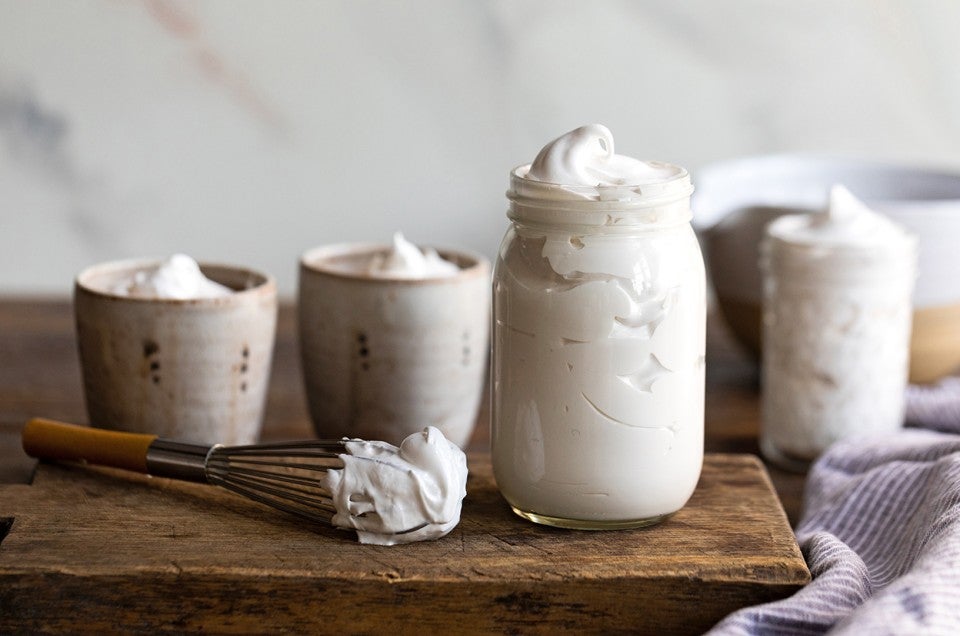
5Continue to whip the fluffy spread for 7 to 8 minutes , or until very thick and glossy. Add the vanilla and whip for another minute.
-
6Scoop the spread into an airtight container. Store for up to 2 weeks at room temperature. The spread can be re-whipped by hand if it becomes "flat."
-
7Tip: Want to try flavored marshmallow spread? Here's some suggestions: Chocolate: add 1/4 to 1/3 cup cocoa powder during the last minutes of mixing Mint: substitute 1 teaspoon peppermint extract for the vanilla Lemon: add the zest of one large lemon to the finished spread.
-
8Tip: If you want to substitute meringue powder for the fresh egg whites, use 3 tablespoons meringue powder + 5 tablespoons water.
-
9Tip: Baking vegan? A good substitute for the egg whites in this recipe is aquafaba, the liquid drained from a can of chickpeas. Surprisingly, it whips into peaks just like egg whites! Substitute 2 tablespoons aquafaba for each large egg white; for specifics on the technique read our blog post, A guide to aquafaba.